Posts

‘Trade is the Life of the Nation’: Economics in the petitions of Elinor James (1681–1716)
Image
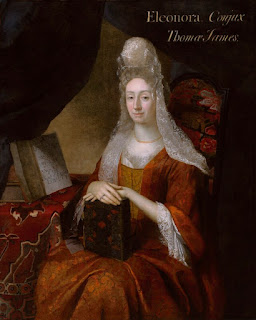
Dr Rosalind Johnson, Visiting Research Fellow, University of Winchester, presented a paper on the petitions of seventeenth-century businesswoman Elinor James at the WESWWHN Annual Conference on Women and Money: A Historical Perspective in 2022. In this blog, she explores the content and motivation behind James’s appeals to monarchs, politicians and alderman.  Elinor James (née Banckes, c.1645–1719), petitioner and printer, authored some ninety known printed papers during the period 1681–1716, addressed to six monarchs, both houses of parliament, and the Lord Mayor and aldermen of the City of London. Her petitions discussed matters concerning trade, religion, the monarchy, and other aspects of current politics, and her activities in promoting her causes ensured she was well-known to her contemporaries. Many of James’s petitions referenced finance, both in trade and in household economics, and her concern is evident in these for the economic situation of those whom she saw as affect...
How did women cope as Head of Household in 1901?

Image
In this blog, Sarah Villiers examines the lives of women living in Easton, Bristol, in the 1900s. Her study reveals that life was hard for many of these women. Sarah gave a talk about her research at our last Annual Conference in October 2022, which was on Women and Money: A Historical Perspective.   Having recently moved to Easton in Bristol, I found my house had been built in the early 1910s. I decided to find out more about my neighbours of that time. I focused on the triangle between three railway lines: to the west, one still extant near Stapleton Road station; a second (now a cycle path) on the east; and the third lying across the top of the triangle roughly following part of Fishponds Road. Most of this area had been market gardens until development rapidly took place. This period coincided with (was stimulated by?) the whole area being incorporated into Bristol City in 1897.   Sources The 1901 census showed a number of households where a woman was identified...

The Remarkable Pinwill Sisters

Image
I n this fascinating blog, Helen Wilson tells the story of some truly remarkable women pioneers – the Pinwill sisters, who ran their own ecclesiastical woodcarving business in Devon in the 1900s.   In about 1890, Mary, Ethel and Violet Pinwill took the audacious step of setting up their own professional ecclesiastical woodcarving company, competing for work in an almost entirely male-dominated occupation. The company thrived and by the 1950s Pinwill carvings, in both wood and stone, could be found in over 200 churches across Devon and Cornwall and elsewhere. Mary Rashleigh ( b 1871), Annie Ethel ( b 1872) and Violet Alice ( b 1874) were the middle daughters of seven sisters, children of the Reverend Edmund and Elizabeth Pinwill. In 1880 when Edmund, the newly appointed vicar, and family arrived in Ermington, south Devon, his first challenge was how to deal with a church in dire need of restoration. The resolution lay in the hands of wealthy local landowner, Henry Bingham Mildma...