Posts

“Would you be so kind as to let me have him back”: some thoughts on women’s work and the history of care
Image
Kate Brooks presented a paper ‘Still seen but not heard: Bristol young people in care today, responding to the history of Muller’s Orphan Homes, Bristol’ at the WESWWHN Annual Conference on Gender and Commemoration in October 2021.   Joseph Lowe was one of six, and nineteen months old when his parents died in 1854. Joseph Snr and Charlotte died of cholera within a fortnight of each other, days after the birth of Joseph’s younger sister Agnes. Willenhall, near Wolverhampton, was a densely populated part of the industrialised Black Country, and cholera rates were extremely high. All but the eldest (who went to work aged 11) went into care. I am currently completing a doctorate on the archives of Muller’s Orphanages, in Bristol, which contains many similar stories. Muller’s was a Victorian, evangelical Christian institution, founded by Plymouth Brethren co-founder George Muller in 1836, and housing at any one time, around 2,000 children, including the Lowes. It is still a religiou...

Women in Street Names Project

Image
Carrie de Silva was our key note speaker at the WESWWHN Annual Conference on Gender and Commemoration in October 2021. In her address Carrie discussed women celebrated in street names and the consequences of the persistence of cultural norms in public commemoration of women’s lives.   Some of you reading this will have heard of the street names project and may have heard a Zoom talk I did a few months ago. The project was launched, in a small way, at the London School of Economics in 2019. I intend to produce a book of brief biographical notes of some of the women who have a street named after them in the UK and also a paper considering some of the deeper issues highlighting, in my view, the importance of the visibility of women in public spaces and the potential impact that a lack of such representation may have on individual women’s self-perception and personal development. Note that an unreconstructed view of gender has been taken as all those found, to date, clearly identif...

Memorializing as Fallism’s Feminist Alternative

Image
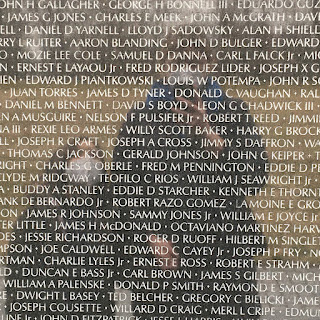
Leila Easa and Jennifer Stager presented a paper about their project exploring feminist methods of memorialization at the WESWWHN Annual Conference on Gender and Commemoration in October 2021. Fallism: toppling monuments that symbolize patriarchal power and often white supremacy. We – two interdisciplinary collaborators from History of Art and English – would like to share a bit about a project that we’ve developed over the past two years, building on decades of collaborative work, and researched and produced in pandemic time. We presented this project, which explores practices of mourning, memorializing, and monumentalizing the dead, at the West of England and South Wales Women’s History Network 28th Annual Conference in Fall 2021, and this research has developed into an essay appearing in RES: Anthropology and Aesthetics 75/76 (2021) and the final chapter of our forthcoming book of essays in feminist criticism and classical receptions, Public Feminism in Times of Crisis: From Sappho...

A sad seasonal story: Henrietta Small of Salisbury

Image
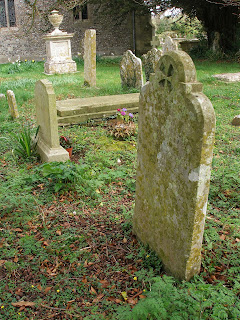
Henrietta Small died on Christmas Day 1877 at her home, 1 New Street, Salisbury. For the daughter and sister of working craftsmen in a provincial city we know a surprising amount of detail because her older brother William wrote four volumes of Cherished Memories and Associations describing his family, employers, work, local politics and religion, the little leisure time he took, his community and natural surroundings.  Henrietta was one of eight siblings, of whom she and three brothers survived to adulthood. She was born in 1828, ‘a very delicate & sensitive child’. (1) Education was clearly important to the family, and William’s writing is particularly valuable for the information it provides about his sisters’ education. Henrietta attended four schools, including Miss Naish’s at the Rose & Crown, Mrs Lucas’s in Exeter Street and Mrs Kingdon’s. ‘After leaving school she went to Mrs Griffins, on the New Canal, to learn the trade of a Milliner & was highly esteemed....